
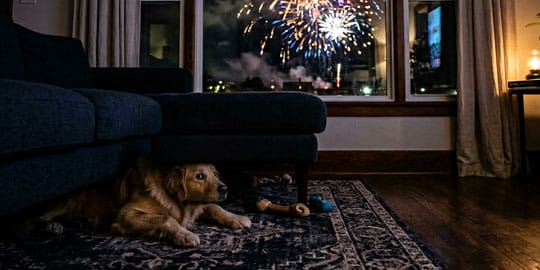
The summer months bring two of a dog’s biggest stressors: record-breaking July 4th fireworks and sudden afternoon thunderstorms. For a dog with noise phobia, these sounds aren’t just loud—they feel like a threat.
Use this checklist to prepare your home and your pup for a calm, safe, and stress-free season.
Phase 1: Create a “Safe Haven” (Internal Preparation)
- Identify the “Inner Sanctum”: Choose a room with the fewest windows (like a basement or walk-in closet).
- Soundproof the Space: Close all windows and pull heavy curtains to dampen outside noise and block out startling flashes of light.
- The “White Noise” Layer: Start DOGTV 30–60 minutes before the noise begins. Our scientifically-calibrated soundtracks help mask the low-frequency rumbles of thunder and the high-pitched “whiz” of fireworks.
- Comfort Essentials: Place their favorite “den” or crate in the room, along with a familiar bed and a worn piece of your clothing for a comforting scent.
Phase 2: Safety & Prevention (External Preparation)
- Update ID Tags: More dogs go missing on July 4th than any other day. Ensure collars are secure and microchip information is up to date.
- Early Exercise: Take your “Big Walk” early in the morning before the humidity rises and the festivities begin. A tired dog is a calmer dog.
- The “Potty Break” Window: Plan your last outdoor trip well before dusk. Never take your dog to a fireworks display or leave them outside during a storm.
Phase 3: Calming Techniques (During the Event)
- Passive Enrichment: Use a slow-feeder or a frozen lick-mat. The act of licking and chewing releases endorphins that naturally help soothe a dog’s nervous system.
- Body Pressure: Consider a snug-fitting “calming wrap” or a weighted blanket, which can provide a sense of security for dogs with high anxiety.
- Stay Level-Headed: Your dog looks to you for cues. Stay calm, speak in a normal tone, and reward brave behavior with high-value treats.
- Consult the Experts: If your dog’s phobia is severe, speak with your veterinarian in June about potential supplements or medications to pair with your DOGTV enrichment.
Phase 4: Long-Term Desensitization
- The Exposure Channel: Don’t wait for the storm to hit. Use DOGTV’s Exposure Segment daily to gently introduce these sounds in a controlled, low-volume environment. This helps “retrain” your dog’s brain to stay neutral when the real noise starts.
Share the Post: