
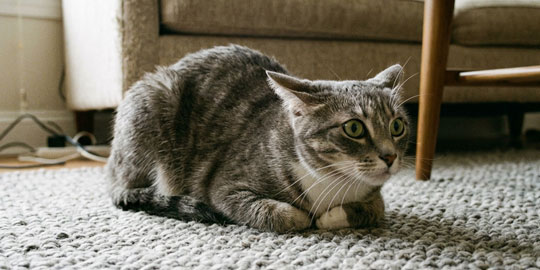
When we think of a stressed-out pet, we usually imagine a shaking dog hiding under the bed during a thunderstorm. But our feline companions experience anxiety just like dogs and humans do. The big difference? Cats are masters of disguise.
Too often, a cat’s cry for help is misinterpretation as a “personality quirk,” a sudden litter box issue, or general “naughtiness.”
For the grand finale of our Pet Anxiety Awareness Month series, we sat down with Dr. Lisa Radosta, a board-certified veterinary behaviorist and proud cat parent. Dr. Radosta broke down the subtle world of cat anxiety—especially the dreaded stress of travel and veterinary appointments—and shared five practical ways you can restore peace to your cat’s life today.
The Subtle Signs of Cat Anxiety
Because cats are both predators and prey in the wild, their instinct is to hide vulnerability. If your cat is struggling with fear, stress, or a sudden change in their environment, they won’t always make it obvious.
Keep an eye out for these key indicators of feline distress:
-
Hiding and Avoidance: Spending excessive time tucked away in closets, under beds, or in secluded spots they used to ignore.
-
Inappropriate Elimination: Going outside the litter box is one of the most common cries for help in the feline world.
-
Over-Grooming: Licking or chewing their fur to the point of bald spots, skin irritation, or scabs (often a self-soothing mechanism).
-
Aggression or Irritability: Sudden hissing, swatting, unprovoked scratching, or redirected aggression toward other pets.
-
Hypervigilance: Pacing, excessive vocalization (plaintive meowing), or an extreme startle response to everyday household noises.
-
Carrier and Travel Fear: Running for the hills the moment the plastic travel crate comes out of the closet.
Why It Happens: The Root of Feline Stress
Cats are creatures of absolute habit. They are incredibly sensitive to shifts in household routine, the introduction of new pets or people, loud noises, and a lack of environmental enrichment.
What many pet parents assume is a cat simply “hating” their carrier is almost always deep-seated fear. When left unaddressed, this chronic stress can spiral into severe behavioral problems or manifest physically as stress-induced medical conditions (like feline lower urinary tract diseases).
5 Ways to Help Your Anxious Cat
The good news from Dr. Radosta is that cat anxiety is highly treatable. Punishment will only worsen the fear, but a compassionate, science-based approach can completely transform your cat’s emotional well-being.
Here are five practical steps you can implement today:
1. Create a Safe, Enriched Environment
Cats need to control their territory to feel safe. Provide plenty of vertical spaces (like cat trees and window perches), secure hiding boxes, and scratching posts. To combat stress born from boredom, introduce puzzle feeders and dedicated daily interactive play sessions to build their confidence.
2. Practice Desensitization and Counter-Conditioning
Don’t let the carrier only appear right before a stressful vet visit. Leave the carrier out in the living room as a permanent piece of furniture. Place cozy bedding, high-value treats, and catnip inside it so your cat learns to associate the crate with comfort and rewards, rather than confinement and fear.
3. Establish Routine and Predictability
In uncertainty, cats find anxiety; in routine, they find peace. Keep feeding times, play sessions, and household quiet zones as consistent as possible. This predictability signals to your cat’s brain that their world is stable and secure.
4. Utilize Pheromone Products and Calming Aids
Synthesized feline facial pheromones (such as Feliway diffusers or sprays) mimic the natural comforting messages cats leave behind when they rub their cheeks against furniture. Utilizing these plug-ins or vet-recommended calming supplements can dramatically lower the baseline stress in a household.
5. Seek Professional Veterinary Care
Before assuming a behavioral issue is strictly psychological, always visit the vet to rule out hidden physical pain or illness. If the anxiety persists, don’t go it alone. A veterinary behaviorist can design a tailored roadmap for your cat, which may combine specialized behavior modification with temporary medical support to help them cross the finish line to a happier life.
Final Thoughts: The Power of Early Intervention
Your cat’s emotional health matters just as much as their physical health. By learning to decode their subtle body language and responding with patience and science, you aren’t just solving a behavioral problem—you are strengthening the lifelong bond you share with your feline best friend.
📺 Watch the Final Segment: Want to see Dr. Radosta’s travel and carrier tips in action? Head over to the DOGTV app now to stream the final episode of our Understanding Pet Anxiety special!